

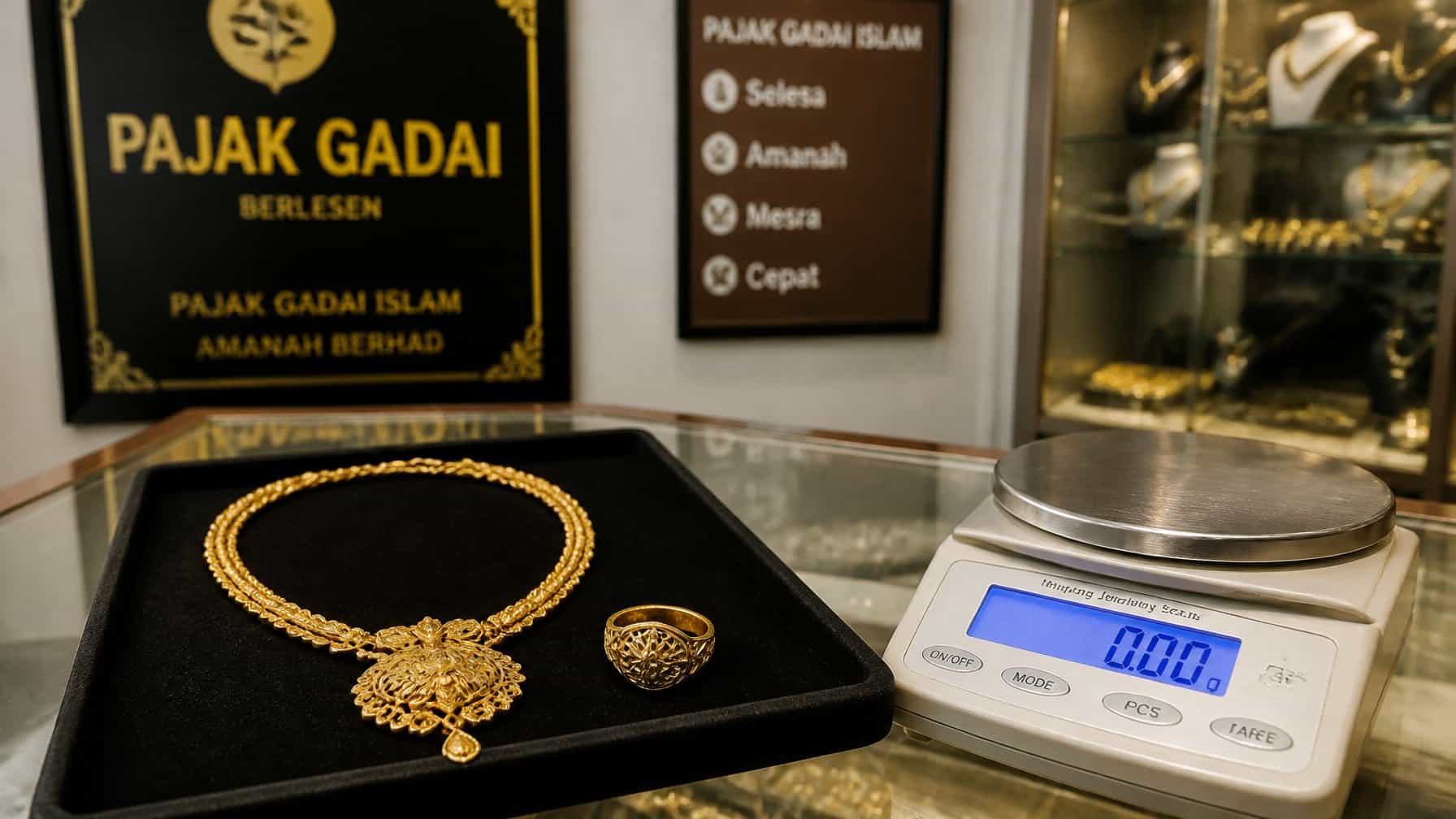
Introduction: What readers should know about pawn shop rates for gold
This article explains how pawn shops value gold, what typical rates look like in Malaysia, and how to compare options before handing over any jewellery. It aims to bust common myths, offer practical tips, and help readers decide whether a pawn loan, outright sale, or another route gives the best value. Related source: pawn shop rates for gold.
How pawn shops value gold
Purity and karat
Pawn shops first check purity — the karat mark (e.g., 24K, 18K) or a hallmark. Higher karat means higher gold content and a higher valuation per gram. Many shops will test items with an acid kit or electronic tester to confirm karat before offering a price. Related source: AIENB.
Weight of the item
Weight is measured in grams. The more grams of pure gold, the higher the base value. Shops usually deduct for non-gold parts like stones, plating, or non-gold clasps when calculating pure gold weight.
Current spot price and dealer margin
Pawn offers are tied to the live gold spot price, but shops rarely pay full spot. Pawn shops apply a margin to cover risk, overhead, and reselling costs, so offers often sit below spot price (National Geographic’s gold background).
Condition, design and resale demand
Condition matters: broken pieces, heavy soldering, or hard-to-sell designs lower offers. Jewellery with high retail demand or recognised designer marks can fetch a premium relative to generic pieces.
Typical pawn shop rates for gold in Malaysia
Offers vary by shop, location, and item. As a rough guide, pawn shops often offer between 50% to 75% of the item’s melt value (pure gold value) for jewellery, sometimes higher for bullion or branded pieces. For example, if the melt value of a gold ring is RM2,000, a typical pawn offer might range from RM1,000 to RM1,500 depending on the factors above (local market observations, 2026).
Ar-Rahnu Islamic pawn services sometimes show different pricing structures and fees; they are popular for small loans and are regulated under local Islamic finance frameworks (Bank Negara Malaysia’s guidance, 2026). Urban centres with more competition may give slightly better rates than smaller towns.
Myth-busting: Common misconceptions about pawn shop gold rates
Myth 1 — Pawn shops always lowball everyone
Some shops do offer low prices, but many aim to be competitive to keep repeat customers. Rates differ widely, so one shop’s “lowball” might be another’s standard offer.
Myth 2 — All pawn shops use the same price list
There’s no universal price list. Each shop uses its own margin and adjustment for condition, jewellery type, and local demand. Comparing 2–3 shops is recommended.
Myth 3 — Karat doesn’t matter if it looks like gold
Karat is crucial. A 22K item contains more gold than 14K, so valuation differs even if both look gold-coloured.
Myth 4 — Pawn equals selling at a huge loss
Pawning for a short-term loan can be less costly than desperate sale in an emergency. If the intention is to get full value, selling to a trusted retailer or bullion dealer may be better than a pawn sale.
Myth 5 — Online buyers always pay more
Online gold-buying platforms sometimes offer higher advertised rates, but buyers should factor in shipping, verification hold times, and fees. Immediate cash at a trusted pawn outlet may outpace a lengthy online sale.
How to get the best rate: practical tips
Compare offers: visit multiple pawn shops and get verbal estimates so the best local rate becomes clear. Shops in busy malls or near commercial districts sometimes compete on price.
Bring documentation and original receipts if available — these can prove purity or brand and sometimes improve the offer. Clean, presentable items often receive better appraisals than tarnished or damaged ones.
Know the spot price before visiting and use it as a reference in negotiations (World Gold Council data is a helpful baseline). Ask about fees, interest rates, and the loan-to-value (LTV) ratio if taking a pawn loan.
Consider timing: gold prices fluctuate daily. If the spot price is trending up, waiting (if possible) can yield a better sale or pawn value; if urgent, prioritise speed and clarity on terms.
Comparing pawn shops versus other options
Pawning (short-term loan)
Pawning provides immediate cash while retaining ownership if the loan and fees are repaid. It’s useful for short-term liquidity but involves interest and storage or redemption fees.
Selling to jewellery stores
Retail jewellers may offer decent rates for branded or intact retail pieces because they can resell with smaller processing costs. They often pay closer to melt value for recognisable brands.
Online gold buyers and platforms
Online buyers can offer competitive rates due to lower overhead, but shipping, verification hold periods, and the risk of damage in transit are trade-offs. Read terms carefully before sending items.
Bullion dealers and pawnbrokers specialising in gold
Bullion dealers typically offer the best returns for bars and coins because resale is straightforward. For jewellery, specialised buyers or refiners who buy by melt value can sometimes beat general pawn shops.
What to expect during a pawn transaction and legal notes
Expect a quick appraisal: most shops weigh, test purity, and make an offer within 10–30 minutes. If pawning, the shop will explain loan terms, interest rates, redemption period, and storage conditions. Always get paperwork showing loan amount, fees, maturity date, and identification requirements.
Regulations and consumer protections vary. Ar-Rahnu services follow Islamic finance principles and are overseen by local authorities; non-Islamic pawn broking is subject to state laws and licensing. For peace of mind, check that the shop is licensed and ask for official receipts—this protects both parties and helps if disputes arise (Bank Negara Malaysia’s consumer info, 2026).